
Breast cancer is a type of cancer that forms in the cells of the breasts. It is one of the most common cancers, especially among women, but it can also occur in men, though it is rare. Here’s an overview:
Breast Cancer Information
Types of Breast Cancer
– Ductal Carcinoma in Situ (DCIS): A non-invasive cancer where abnormal cells are found in the lining of a breast duct but have not spread.
– Invasive Ductal Carcinoma (IDC): The most common type of breast cancer, where the cancer cells break out of the ducts and invade nearby breast tissue.
– Invasive Lobular Carcinoma (ILC): Cancer that starts in the lobules (glands that produce milk) and spreads to surrounding tissues.
– Triple-Negative Breast Cancer: Lacks three common receptors known to fuel breast cancer (estrogen, progesterone, and HER2). This type is more aggressive and harder to treat.
– HER2-positive Breast Cancer: This type has high levels of the HER2 protein, which promotes cancer cell growth. Targeted therapies can be effective here.
Risk Factors
– Gender: Women are far more likely than men to develop breast cancer.
– Age: The risk increases as you get older.
Genetics: Certain inherited genetic mutations, such as BRCA1 and BRCA2, can significantly increase the risk.
– Family History: A family history of breast cancer can increase the risk, though many people with no family history also develop it.
– Lifestyle Factors: Obesity, alcohol consumption, and lack of physical activity can contribute to risk.
– Hormonal Factors: Prolonged exposure to estrogen (e.g., early menstruation or late menopause) can increase risk.
Symptoms
– A lump or thickening in the breast or underarm.
– Changes in breast size or shape.
– Nipple discharge, particularly if it is bloody.
– Skin changes, such as dimpling or redness.
– Inverted nipple or changes in the appearance of the nipple.
Diagnosis
– Self-Exams and Clinical Exams: Early detection often starts with self-awareness or routine clinical breast exams.
– Mammogram: A screening tool that can detect lumps or abnormalities before they are felt.
– Ultrasound or MRI: Imaging used when more detail is needed.
– Biopsy: Removal of tissue or fluid for analysis to determine if it is cancerous.
Treatment Options
– Lumpectomy: Removal of the tumor and some surrounding tissue.
– Mastectomy: Removal of one or both breasts.
– Radiation Therapy: High-energy waves used to kill cancer cells.
– Chemotherapy: Use of drugs to destroy cancer cells.
– Hormonal Therapy: Blocks hormones like estrogen that fuel some types of breast cancer.
– Targeted Therapy: Drugs that target specific characteristics of cancer cells, such as HER2 protein.
– Immunotherapy: Helps the immune system fight cancer.
Prevention and Early Detection
– Regular Screenings: Mammograms are the most effective screening tool.
– Genetic Testing: For those with a family history, testing for BRCA1 and BRCA2 mutations may be helpful.
– Lifestyle Choices: Maintaining a healthy weight, exercising regularly, and limiting alcohol intake can help lower risk.
– Medications: Some high-risk individuals take preventive medications such as tamoxifen.
Early detection significantly improves the chances of successful treatment. Breast cancer research is advancing, with many promising treatments and preventive strategies under development. If you’d like more specific information on any aspect, feel free to ask!
Cancer is a broad term for a class of diseases characterized by abnormal cells that grow and invade healthy cells in the body. Breast cancer starts in the cells of the breast as a group of cancer cells that can then invade surrounding tissues or spread (metastasize) to other areas of the body.
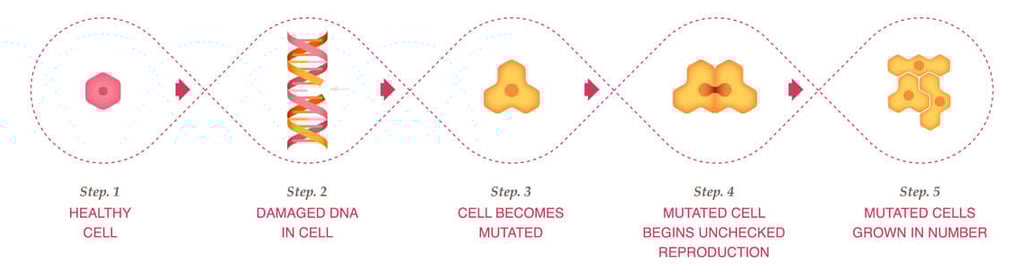
Cancer occurs when changes called mutations take place in genes that regulate cell growth. The mutations let the cells divide and multiply in an uncontrolled way.
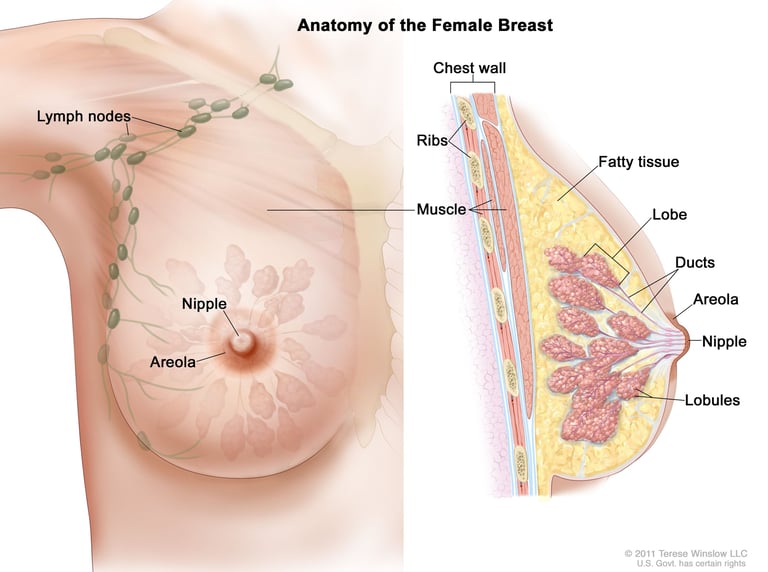
Breast cancer is cancer that develops in breast cells. Typically, the cancer forms in either the lobules or the ducts of the breast. Lobules are the glands that produce milk, and ducts are the pathways that bring the milk from the glands to the nipple. Cancer can also occur in the fatty tissue or the fibrous connective tissue within your breast.
The uncontrolled cancer cells often invade other healthy breast tissue and can travel to the lymph nodes under the arms. The lymph nodes are a primary pathway that help the cancer cells move to other parts of the body.
Breast Cancer Symptoms
In its early stages, breast cancer may not cause any symptoms. In many cases, a tumor may be too small to be felt, but an abnormality can still be seen on a mammogram. If a tumor can be felt, the first sign is usually a new lump in the breast that was not there before. However, not all lumps are cancer.
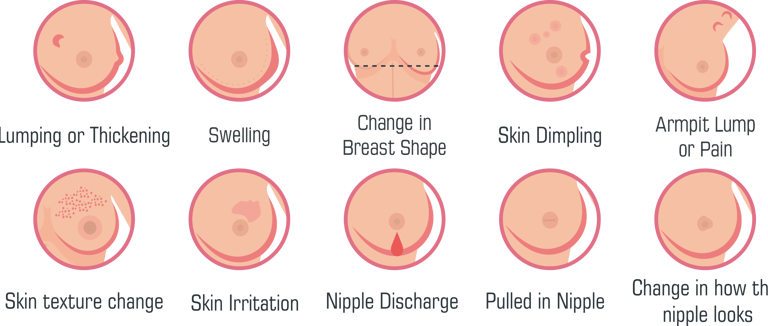
Each type of breast cancer presents a range of symptoms, some of which may be similar while others differ. Common signs to watch for include: A newly developed lump or thickened tissue in the breast that feels different from the surrounding area, Breast pain, Red, dimpled, or pitted skin covering the breast, Swelling in part or all of the breast, Nipple discharge that isn’t breast milk, including bloody discharge, Peeling, scaling, or flaking skin on the nipple or breast, Sudden, unexplained changes in breast shape or size, An inverted nipple, Visible skin changes on the breast, A lump or swelling under the arm.
If you have any of these symptoms, it doesn’t necessarily mean you have breast cancer. For instance, pain in your breast or a breast lump can be caused by a benign cyst. Still, if you find a lump in your breast or have other symptoms, you should see your doctor for further examination and testing.
Type of Breast Cancer
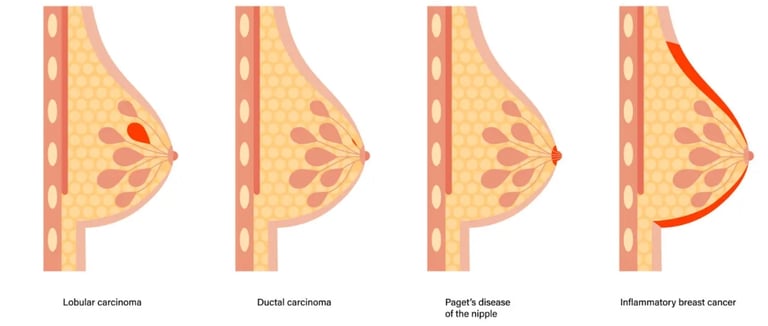
There are several types of breast cancer, and they are broken into two main categories: “invasive” and “noninvasive,” or in situ. While invasive cancer has spread from the breast ducts or glands to other parts of the breast, noninvasive cancer has not spread from the original tissue.
These two categories are used to describe the most common types of breast cancer, which include:
Ductal carcinoma in situ: (DCIS) is a noninvasive condition. With DCIS, the cancer cells are confined to the ducts in your breast and haven’t invaded the surrounding breast tissue.
Lobular carcinoma in situ: (LCIS) is cancer that grows in the milk-producing glands of your breast. Like DCIS, the cancer cells haven’t invaded the surrounding tissue.
Invasive ductal carcinoma: (IDC) is the most common type of breast cancer. This type of breast cancer begins in your breast’s milk ducts and then invades nearby tissue in the breast. Once the breast cancer has spread to the tissue outside your milk ducts, it can begin to spread to other nearby organs and tissue.
Invasive lobular carcinoma: (ILC) first develops in your breast’s lobules and has invaded nearby tissue.
Other, less common types of breast cancer include:
Paget disease of the nipple. This type of breast cancer begins in the ducts of the nipple, but as it grows, it begins to affect the skin and areola of the nipple.
Phyllodes tumor. This very rare type of breast cancer grows in the connective tissue of the breast. Most of these tumors are benign, but some are cancerous.
Angiosarcoma. This is cancer that grows on the blood vessels or lymph vessels in the breast.
The type of cancer you have determines your treatment options, as well as your likely long-term outcome.
Inflammatory Breast Cancer
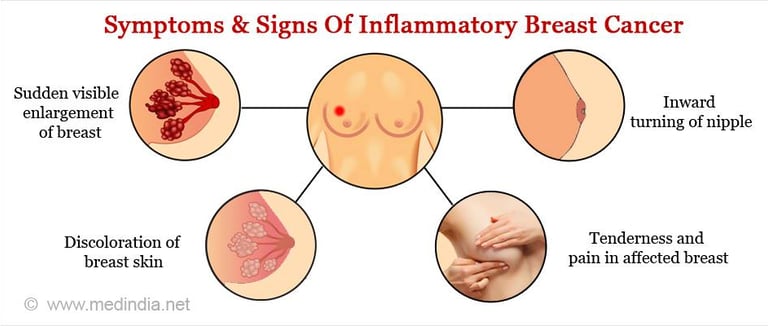
Inflammatory breast cancer (IBC) is a rare but aggressive type of breast cancer. IBC makes up only between 1 and 5 percent trusted source of all breast cancer cases.
With this condition, cells block the lymph nodes near the breasts, so the lymph vessels in the breast can’t properly drain. Instead of creating a tumor, IBC causes your breast to swell, look red, and feel very warm. A cancerous breast may appear pitted and thick, like an orange peel.
IBC can be very aggressive and can progress quickly. For this reason, it’s important to call your doctor right away if you notice any symptoms.
Male Breast Cancer
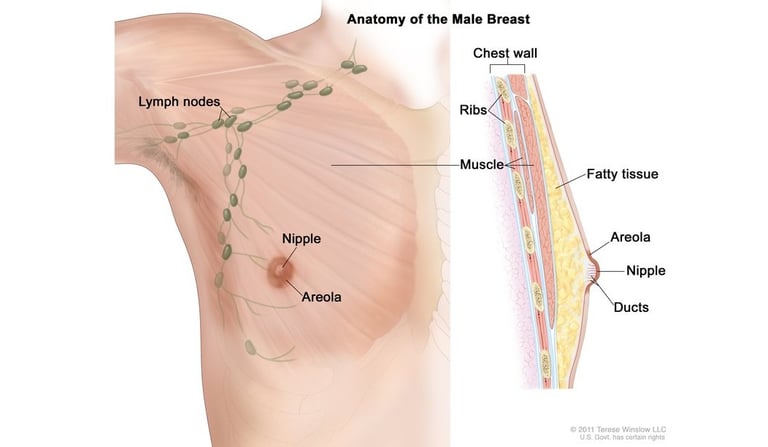
All people, whether male or female, are born with some breast cells and tissue. Even though males do not develop milk-producing breasts, a man’s breast cells and tissue can still develop cancer. Even so, male breast cancer is very rare. Less than one percent of all breast cancer cases develop in men, and only one in a thousand men will ever be diagnosed with breast cancer.
Breast cancer in men is usually detected as a hard lump underneath the nipple and areola. Men carry a higher mortality than women do, primarily because awareness among men is less and they are less likely to assume a lump is breast cancer, which can cause a delay in seeking treatment.
– Infiltrating Ductal Carcinoma Of the men who develop breast cancer, the vast majority of those cases are infiltrating Ductal Carcinoma (IDC), which means cells in or around the ducts begin to invade surrounding tissue. Very rarely, a man might be diagnosed with inflammatory breast cancer, or Paget disease, of the nipple.
Sign and Symptoms of Male Breast Cancer
Male breast cancer can exhibit the same symptoms as breast cancer in women, including a lump. Anyone who notices anything unusual about their breasts, whether male or female, should contact their physician immediately. Survival rates and treatment for men with breast cancer are very similar to those for women. Early detection of breast cancer increases treatment options and often reduces the risk of dying from breast cancer.
Although treatment outcomes are very similar to women at the same stage of detection, a man diagnosed with breast cancer should also consider seeing a genetics counselor for a consultation. If a man tests positive for a defective gene (most commonly either BRCA1 or BRCA2) that can lead to a future diagnosis of breast cancer and his children have a 50% chance of carrying the gene. In addition.
A male child of a man with breast cancer who inherits the defective BRCA2 gene has only approximately 6% chance of eventually developing breast cancer and just over 1% with BRCA1.
A female child of a man with breast cancer who inherits the defective gene has a risk between 40% and 80% of eventually developing breast cancer.
Men with a genetic predisposition to breast cancer are also at higher risk of getting prostate cancer at a younger age than usually diagnosed.